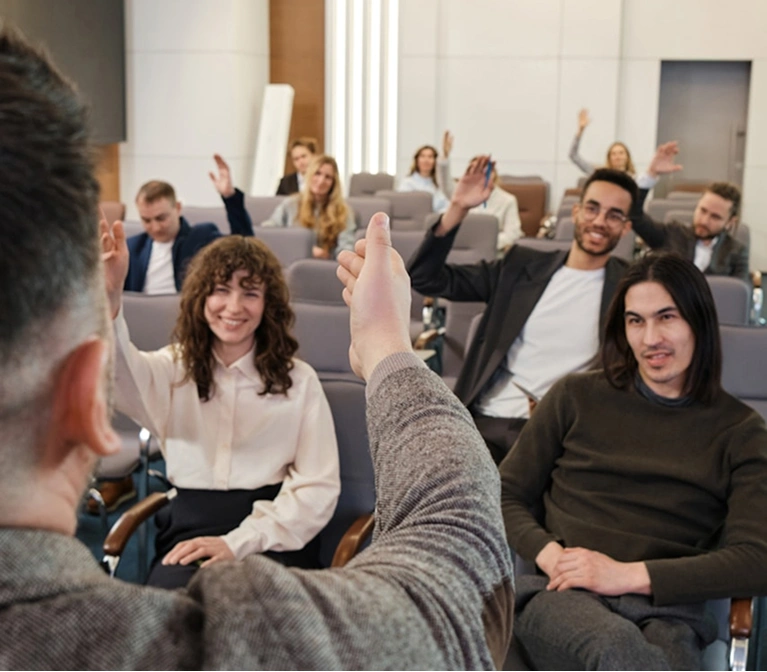
The era of “passive attendance” is officially over. As we navigate 2026, the live events industry has moved beyond simply filling rooms to creating living ecosystems of connection. At Strive Agency, we’ve seen the shift firsthand: attendees no longer want to just watch an event; they want to influence it.
If you’re planning for the year ahead, these are the three seismic shifts defining the next generation of experiences.
Pre-Planning: Setting the Foundation
Ironically, as technology gets more advanced, the most high-impact events are ditching the screens.
The Trend: We are seeing a surge in Sensory-First Design. Think 360-degree projection mapping that changes based on the speaker’s tone, or "haptic" environments where the lighting and even the scent of the room shift to match the event's narrative.
The Trend: Micro-Experiences. High-growth companies are trading massive, one-size-fits-all conventions for a series of high-touch "Micro-Events"—targeted, regional gatherings that prioritize deep dialogue over loud stages.
Sustainability as a Baseline, Not a “Badge”
In 2026, being “eco-friendly” is no longer a marketing hook—it’s a prerequisite.
The Trend:Circular Production. We’re moving toward zero-waste “strike” (teardown) phases. This includes everything from digital-only signage to modular stage sets that are rented and repurposed rather than sent to a landfill.
Purpose-Driven Programming: Attendees are asking, “What is the footprint of this event, and what is its legacy?” Events that give back—whether through local sourcing or integrated charity activations—are seeing 40% higher engagement.
While AI handles the logistics, the “Human Premium” is what people actually pay for. In a world of digital doppelgängers, the physical energy of a room is the only thing that can’t be replicated.
“The most successful events of 2026 aren’t measured by how many people showed up, but by how many meaningful conversations started because of the environment we built.”